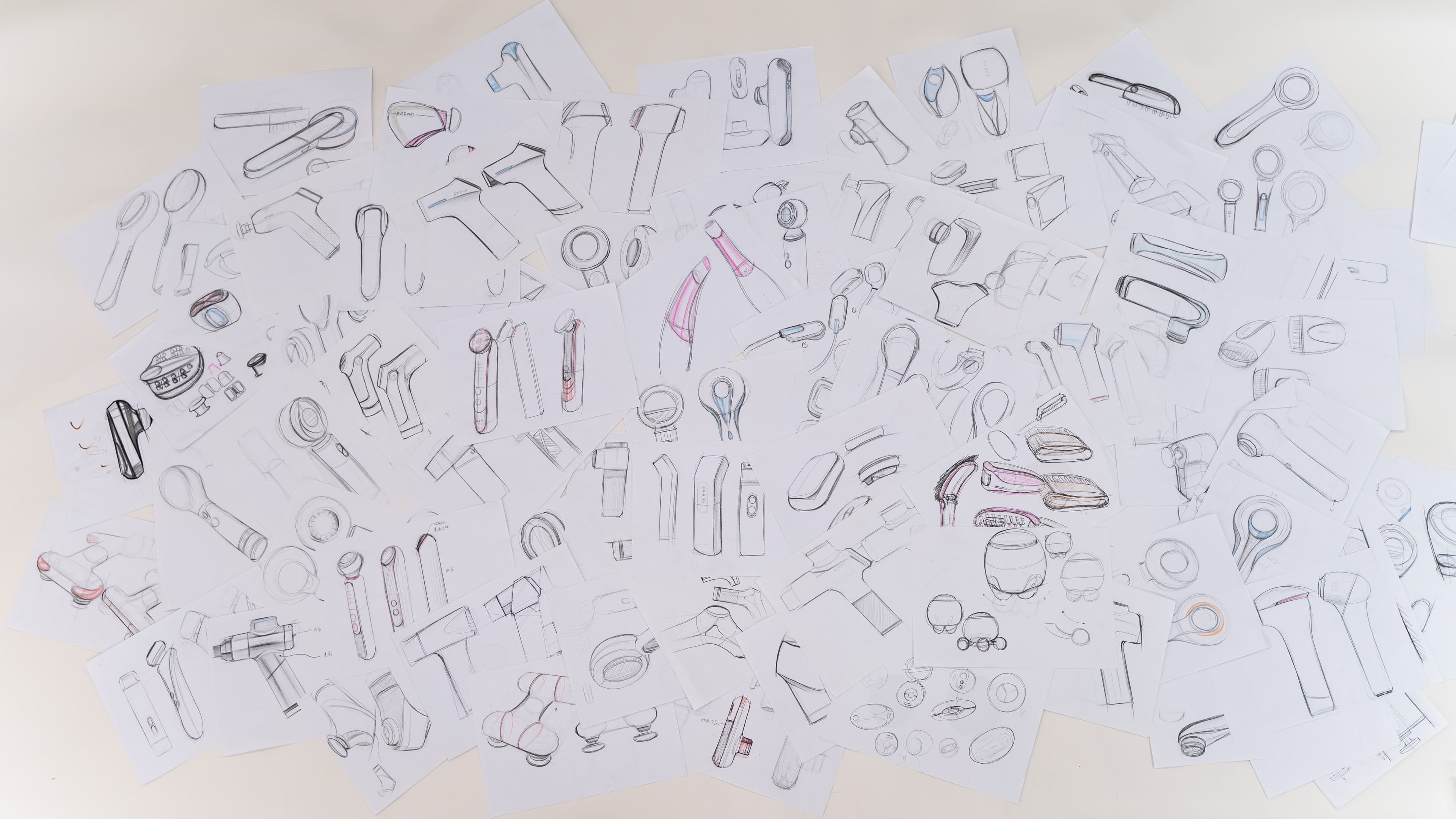

A scalp-care device concept can quickly become a list of possible functions. A more useful first conversation starts with the routine: who will use the product, how they will move it through their hair, and what they should understand at each moment.
The aim of an early brief is to define that experience clearly enough to guide design reviews and prototype work. Product performance and any proposed claims need their own agreed evaluation; a feature list alone cannot establish an outcome.
Map a complete session
Describe how the user picks up the device, switches it on, selects a setting, uses it and puts it away. Include charging, storage and cleaning in the sequence rather than treating them as later additions.
Ask where the device will be used and how that setting affects the brief. A product intended for a home routine may need different handling and storage decisions from one used in a professional setting. Record the intended conditions and any uncertainties for engineering review.
Make handling a review topic
Shape, weight distribution and the location of controls should be assessed together. A button that looks convenient in a drawing may feel different when someone holds a physical sample and changes their grip.
Set up sample reviews around representative tasks. Ask participants to show how they would hold the device and find the controls. Record what they did, where they hesitated and which design revision might address the observation. Avoid turning a single preference into a universal conclusion.
Give each function a clear purpose
For every proposed function, describe the user-facing role and how the user will recognise its state. If there are multiple modes, define why someone would choose one and how the controls communicate that choice.
- What should happen when the device is switched on?
- How will the current mode be indicated?
- What should the user do if a session is interrupted?
- How will charging and low-power states be communicated?
- Which aspects need validation before instructions are finalised?
These questions create a shared interaction brief without prematurely deciding the internal design.
Include care and storage from the beginning
Discuss contact surfaces, removable parts if proposed, and the intended cleaning process with the development team. The design, materials and instructions need to support the same care routine. Do not infer cleaning methods or water exposure limits from appearance alone.
The storage and charging arrangement also affects the everyday experience. Include it in prototype reviews so the complete product can be assessed together.
Turn observations into the next brief
After reviewing a sample, group feedback into handling, interaction, appearance and engineering questions. State the observed issue, the desired change and how the next sample will be assessed.
For an initial BaiChang discussion, share your intended audience, reference sample or concept, preferred functions and routine map. This gives the team a clearer starting point for developing a device around your brand's requirements.
Words by Shenzhen BaiChang Technology Co., Ltd.
Explore our development approach ↗