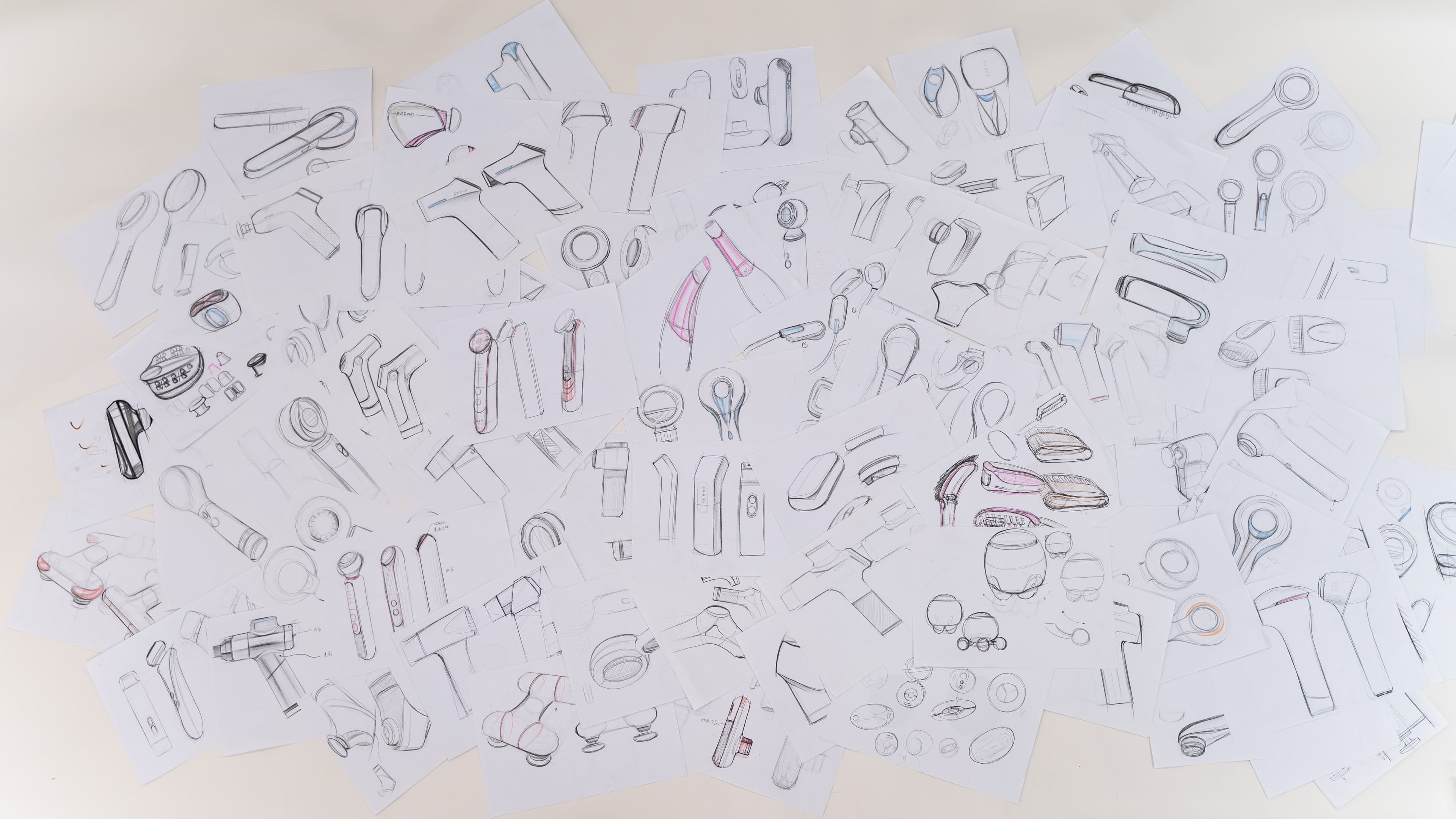
A brand may come to a development partner with a sketch, an existing product, or a problem its customers keep describing. Each is a valid starting point. The first task is to explain what the new device needs to do, for whom, and under which conditions.
A useful brief does not need to solve the engineering. It needs to make the intended experience and the business priorities clear enough for the team to ask better questions.
Begin with the person using the product
Describe one realistic use situation before listing features. Where will someone use the device? How will they hold it? What should be obvious without opening the instructions? Which part of their current routine should become easier?
For a handheld care device, these questions can affect the size, controls, contact surfaces and charging arrangement. Write down the desired experience first, then distinguish it from ideas about how the device might achieve it.
Explain what the reference sample means
A sample communicates many things at once. Your team may like its shape but dislike its controls. You may want a different function inside a similar overall size. Without that explanation, two people can examine the same sample and reach different conclusions.
- Identify the aspects you want to retain, such as the grip or storage format.
- Mark the aspects that must change, including limitations observed during use.
- Separate visual inspiration from functional requirements.
- Share your own drawings, feedback and usage notes alongside the sample.
The purpose is to communicate a direction for your own product. A reference alone is not a complete specification.
Separate essentials from options
A long feature list can conceal the decisions that matter most. Divide the brief into essential requirements, preferred features and ideas to investigate. If size, runtime, cost and a particular function compete, indicate which priority should guide the next discussion.
Use measurable acceptance criteria where your team already has them. Where you do not, record the open question rather than inventing a number. “We need to agree how to assess comfort during a ten-minute session” gives the development team a clearer task than “make it comfortable.”
Include the commercial context
Share the intended sales markets, brand positioning, target launch window and an initial order-volume range if available. These inputs help frame questions about packaging, documentation, production planning and the work needed before launch.
Treat early targets as discussion inputs. A development schedule or unit-cost estimate needs to be checked against the agreed scope, design choices and validation work. Record assumptions so that later changes can be discussed openly.
Prepare a compact starting package
- A short description of your customer and the intended use.
- Your concept, drawings, sample photographs or existing specifications.
- Essential functions and the decisions you still need help making.
- Preferred size, appearance and interaction direction.
- Intended markets, timing and volume assumptions.
- The person who will consolidate feedback and approve each stage.
With these pieces in place, an initial conversation can move beyond a general product enquiry. The brand and development team can identify what is already defined, what needs investigation and which deliverable should come next.
Words by Shenzhen BaiChang Technology Co., Ltd.
Explore our development approach ↗